
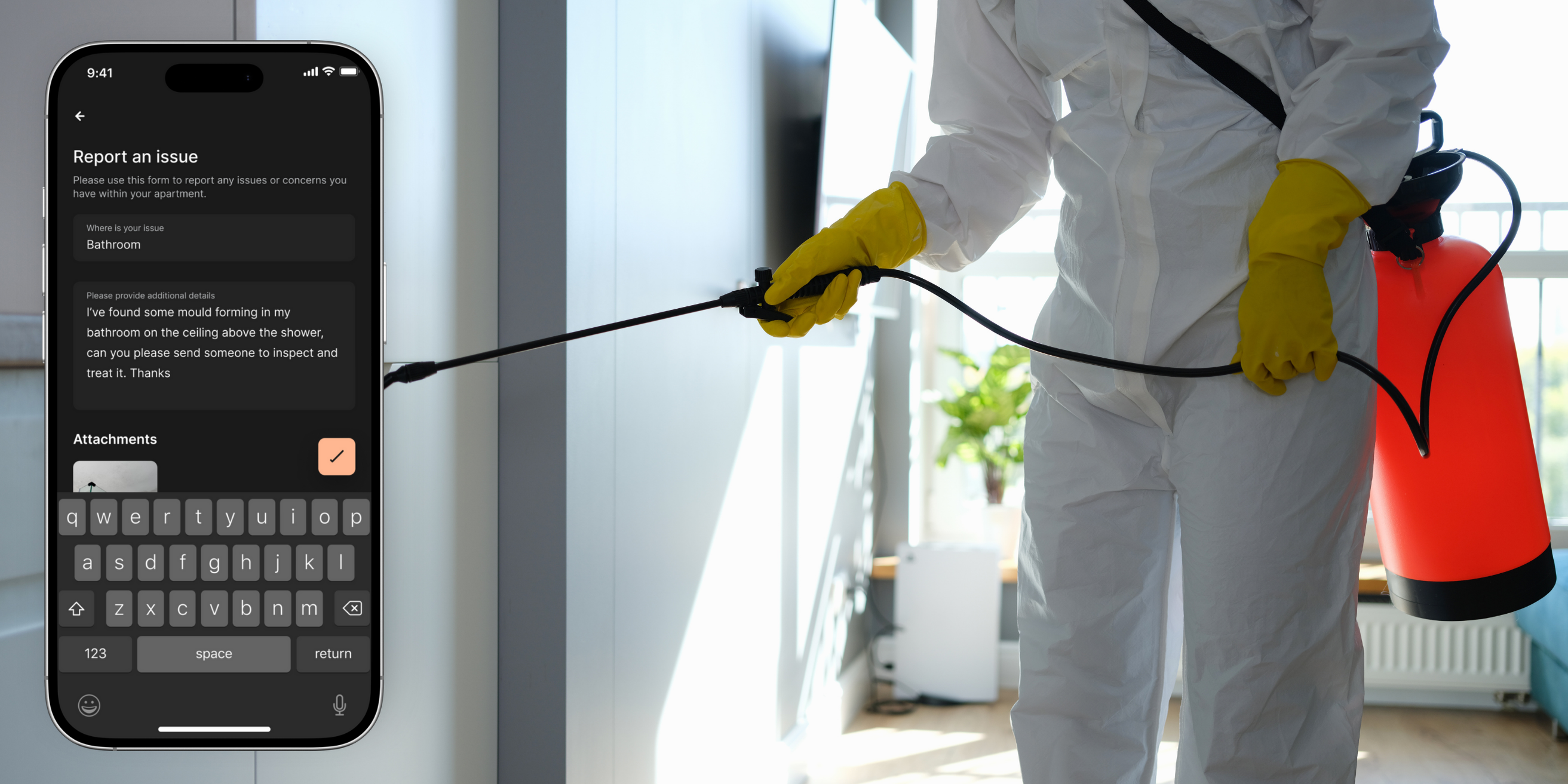
Phase One of Awaab’s Law is now officially in effect for the social housing sector, marking a major milestone in improving living conditions and tackling damp and mould across homes in England.
While these new rules currently apply only to social landlords, the government has also committed to extending Awaab’s Law to the private rented sector to ensure all renters in England are empowered to challenge dangerous conditions. This will be made law through the Renters’ Rights Bill. Although no official implementation date has been set for the private rented sector, legal summaries suggest a rollout between 2026 and 2027.
This means that private residential and Build to Rent (BTR) operators should begin preparing now — before these stringent requirements become law across the wider rental market.
Spike Living can help property operators implement robust systems for maintenance tracking, compliance, and resident communication – essential for staying compliant and protecting residents’ wellbeing.
What Is Awaab’s Law?
Awaab’s Law was introduced following the tragic death of two-year-old Awaab Ishak, who suffered prolonged exposure to mould in his family’s flat. The law, forming part of the Social Housing (Regulation) Act 2023, will enforce strict timelines for landlords to respond to damp and mould complaints:
Emergency repairs must be completed within 24 hours.
Non-urgent issues must be investigated within 14 working days, and repairs must begin within 7 working days of confirmation.
Failure to comply can result in significant fines, enforcement action, and reputational damage for landlords and operators.
Under the new enforcement framework, the Regulator of Social Housing and Housing Ombudsman have the authority to impose unlimited fines, issue performance improvement plans, and publicly name and shame non-compliant landlords.
These measures aim to ensure faster action, improve accountability, and protect tenants’ health and safety.
Housing Ombudsman: Robust Records Are Essential
The Housing Ombudsman has emphasised the importance of maintaining accurate and detailed records to manage and prioritise damp and mould cases effectively. Many historic complaints have stemmed from poor record-keeping and delayed responses, which could now lead to enforcement action under Awaab’s Law.
Landlords are strongly encouraged to review and strengthen their maintenance and inspection processes. A structured, transparent approach to reporting and resolving issues will not only ensure compliance but also foster higher resident trust and satisfaction.
Preparing for Future Legislation in the Private Rented Sector
Although the new rules currently apply only to social housing, private landlords and BTR operators are next in line. The government’s commitment to extend Awaab’s Law through the Renters’ Rights Bill signals a major shift in accountability across the rental market.
This upcoming legislation will require private operators to adopt the same strict reporting and repair timelines, meaning now is the time to get ahead.
How Spike Living Can Help Property Operators Prepare
Spike Living’s resident engagement and property management platform offers a suite of tools to help operators meet compliance standards and strengthen communication with residents offers key features to help landlords and operators prepare for Awaab’s Law and any future extensions to the private rental sector:
1.) Streamlined Maintenance Reporting Process
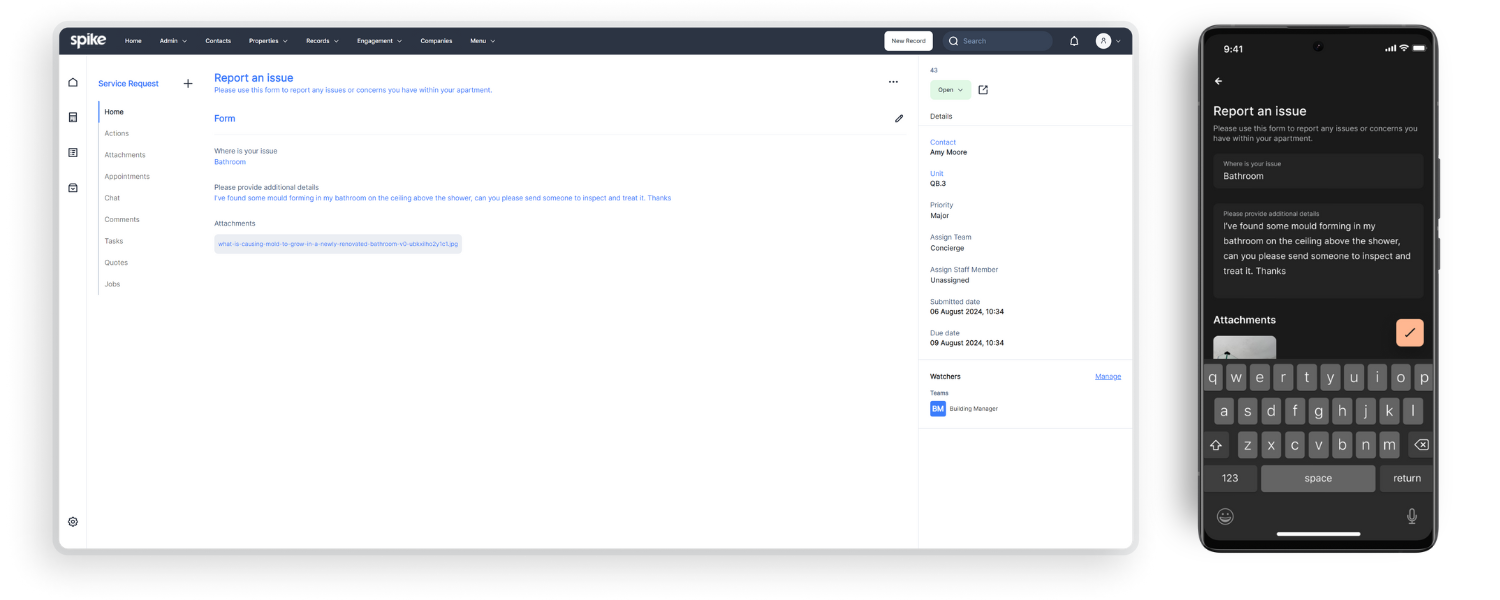
Our advanced maintenance reporting module enables property managers to meet compliance standards efficiently. The platform simplifies maintenance request management, ensuring issues are logged, tracked, and resolved promptly.
Residents can easily submit maintenance requests via the app, triggering real-time notifications for property management staff. This ensures immediate action and enhances resident satisfaction by minimising delays.
Additionally, residents can attach photos to their maintenance requests, allowing maintenance teams to diagnose issues ahead of time. This means staff arrive prepared with the right tools and parts, increasing the likelihood of resolving issues on the first visit and reducing response times by up to 30%.
2.) Increased Transparency
Two-way communication is facilitated through the platform, allowing tenants to receive updates on their requests and maintenance staff to communicate directly with them. For instance requesting additional information or clarification on an issue, as well as arranging a suitable time for an inspection.
3.) Efficient Tracking and Prioritisation
Property managers can oversee all maintenance requests from a centralised dashboard, categorising issues based on urgency and severity. This ensures that high-risk problems are prioritised and resolved first, helping operators stay compliant with Awaab’s Law.
4.) Enhanced Response Times
Spike Living streamlines investigation and repair processes by automating notifications and progress tracking. Operators can ensure:
Issues are investigated within 14 working days
Repairs are initiated within 7 working days
Emergency hazards are resolved within 24 hours
This improves compliance, prevents escalation to the Ombudsman, and boosts resident satisfaction.
5.) Detailed Documentation & Audit Trails
The platform maintains a clear audit trail of all correspondence, with all activities logged against a property and resident, helping property managers comply with the record-keeping requirements of Awaab’s Law. This ensures that every step, from complaint to resolution, is documented, in case of future disputes.
6.) Automated Task Scheduling
Spike Living’s automated task scheduling feature ensures that routine maintenance, inspections, and compliance checks are never overlooked. Property managers can set up recurring tasks for damp and mould inspections, ventilation assessments, and follow-ups on reported issues.
By automating these processes, operators can maintain consistent property upkeep, meet regulatory deadlines, and proactively address potential hazards before they become serious issues. This reduces manual oversight, enhances operational efficiency, and helps ensure long-term compliance with Awaab’s Law and future regulatory changes.
Future-Proof Your Compliance with Spike Living
With Awaab’s Law now in force for social landlords – and the private rented sector next in line – property operators must act now to strengthen their compliance and maintenance processes.
Spike Living provides the digital infrastructure needed to streamline maintenance, improve communication, and stay ahead of evolving regulations.
Book a demo today to see how Spike Living can help you streamline maintenance processes, maintain robust compliance records, and enhance resident communication.