New workplace harassment protections come into force on 30 October 2026. For property operators, the changes raise an important question: if an incident happens in your building, can you clearly evidence what happened and what your team did next?
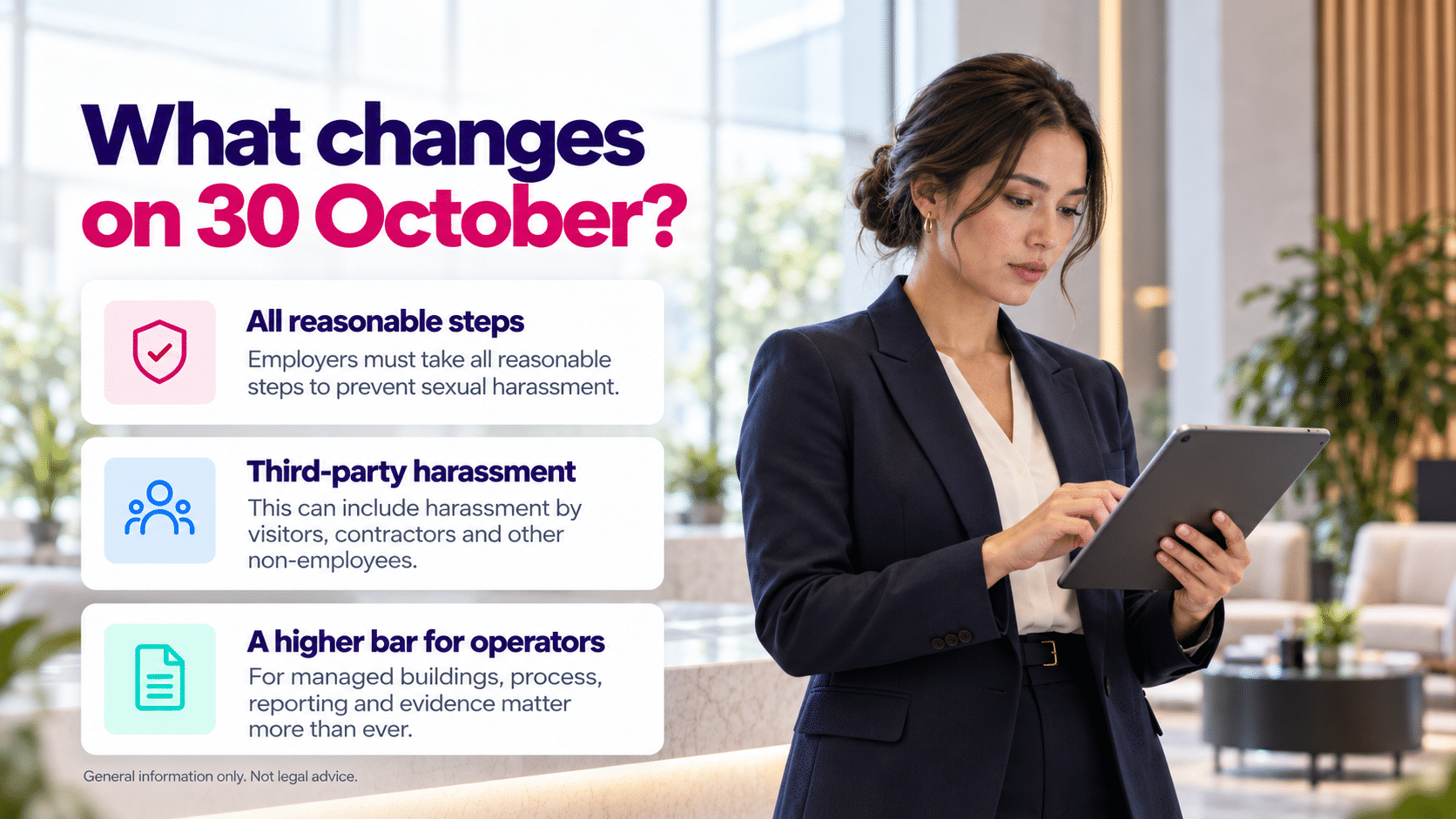
From 30 October 2026, UK workplace harassment law is changing. Under the Employment Rights Act 2025, employers will be required to take “all reasonable steps” to prevent sexual harassment of their employees, strengthening the existing duty to take reasonable steps.
At the same time, employers could also become liable where an employee experiences harassment from a third party, unless they can demonstrate that all reasonable steps were taken to prevent it. For organisations operating managed buildings, this is particularly relevant.
Property teams do not only interact with colleagues. They interact with residents, visitors, contractors, tradespeople, cleaners, security teams, delivery drivers and members of the public every day.
That means harassment prevention cannot sit solely within an HR policy, it’s also an operational readiness issue.
What Changes on 30 October?
There are two significant changes for employers.
The first is the strengthened preventative duty around sexual harassment. The existing requirement to take “reasonable steps” becomes a requirement to take all reasonable steps that are appropriate for the organisation. ACAS explains that this means focusing on prevention rather than simply reacting after an incident, and considering the steps that are reasonable across the organisation as a whole.
The second change concerns third-party harassment. A third party can be anyone an employee comes into contact with through their work who does not work for their employer. ACAS examples include customers, clients, contractors, tradespeople and members of the public in shared spaces.
For property operators, the relevance is immediate.
A concierge, property manager, security officer or member of a front-of-house team may interact with dozens of people who fall outside their organisation during a normal working day.
The government’s guidance confirms that the new third-party provision extends beyond sexual harassment to other forms of harassment covered by the Equality Act 2010, subject to the characteristics included within the harassment provisions of the Act.
Why this Becomes an Operational Challenge
Most organisations will already have policies covering bullying, harassment and workplace behaviour. But a policy is only one part of the picture.
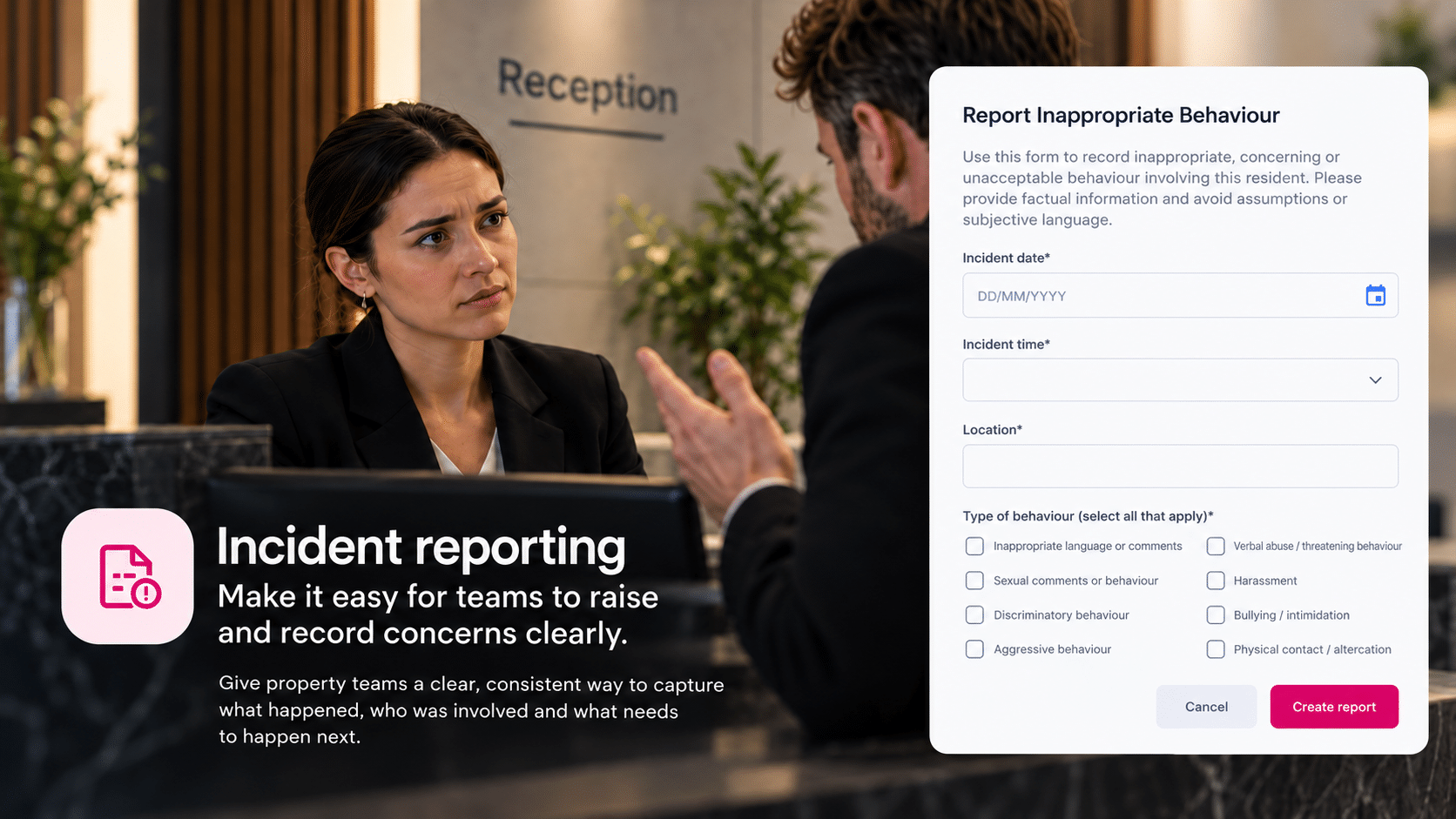
Imagine a resident makes inappropriate or harassing comments towards a member of the property team at reception. The incident might initially seem simple, but if that incident later needs to be reviewed, the operational questions quickly become more detailed.
- Who was involved, and where did the incident happen?
- When was it reported and by whom?
- Was the incident linked to the relevant resident, visitor or contractor record?
- Who was responsible for following it up?
- What action was taken?
- Was the employee checked in with afterwards?
- Can the complete history still be retrieved several months later?
These are not simply legal questions, they are questions about reporting, ownership, visibility and record keeping.
And this is where building operations can make a meaningful difference.
The Record Matters
ACAS specifically identifies monitoring and recording incidents and the actions taken as one of the steps employers may consider when looking at how to prevent third-party harassment. Other examples include risk assessments, clear reporting routes, staff training and policies setting out how third-party harassment should be handled.
For property teams, having the right operational processes in place can make it significantly easier to maintain that record.
A stronger operational process could create a clear history:
Incident reported → linked to the resident record → action recorded → employee follow-up completed → outcome documented.
Rather than relying on an email chain, handwritten notes or information held by individual members of staff, the organisation has a clearer timeline of what happened and what followed.
That does not replace prevention, training or appropriate HR procedures, but it does make the operational response easier to see, manage and retrieve.
Visitor Visibility Matters Too
Not every incident will involve a resident.
Managed buildings regularly welcome contractors, guests, delivery drivers and other visitors, and the legislation’s extension to third-party harassment makes visibility over those interactions increasingly important.
If an issue is reported retrospectively, one of the first practical questions may be:
Who was actually in the building at the time?
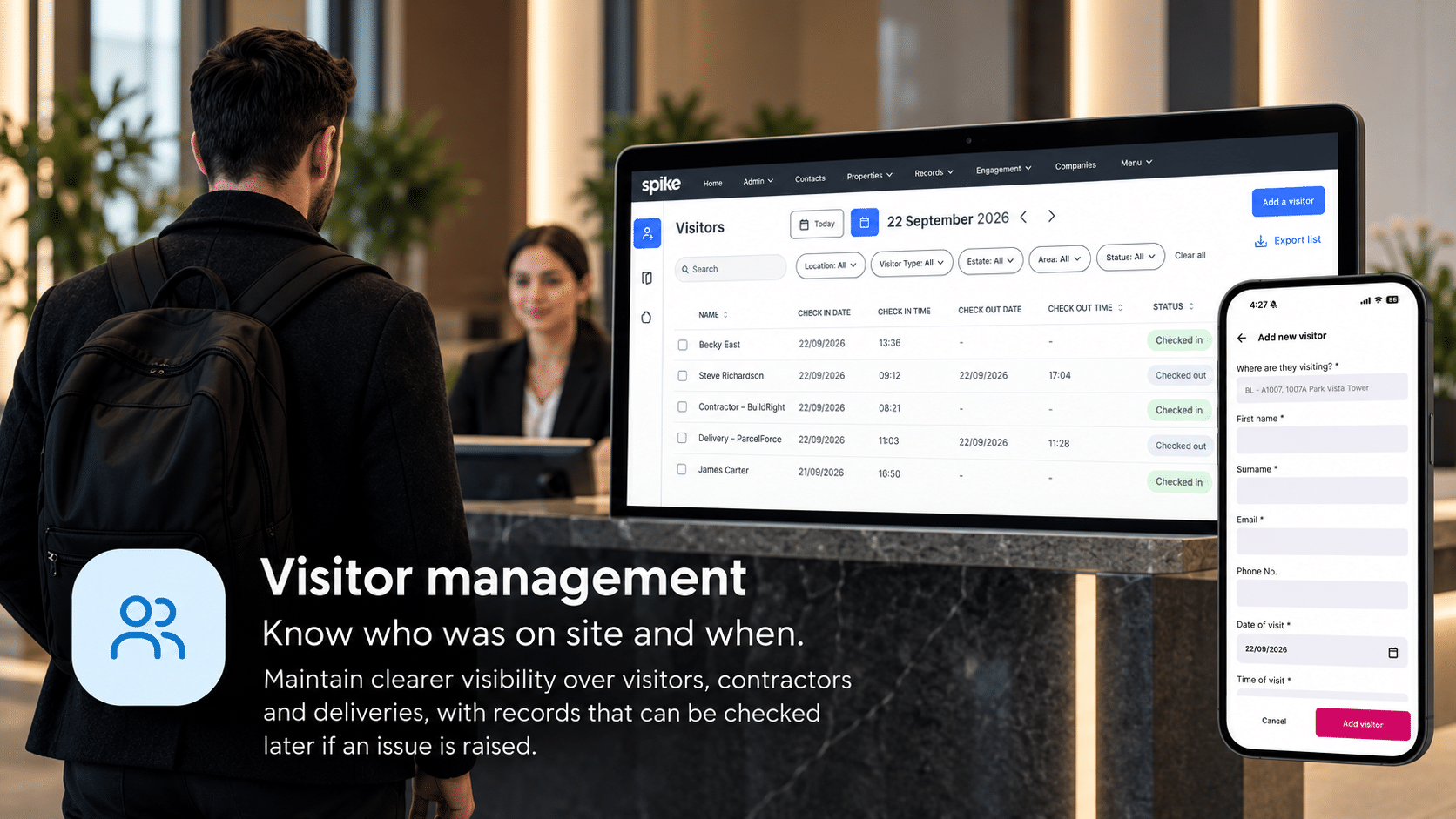
Digital visitor management can provide additional context by maintaining information such as arrival and departure times, the person or property being visited and relevant visitor or contractor details.
That information is not, by itself, harassment prevention, but as part of a wider operational framework, it can help teams understand the circumstances surrounding an incident and retrieve relevant records more quickly.
From Incident Reporting to Audit Trail
There is also a significant difference between simply recording an incident and maintaining an effective audit trail.
A useful audit trail shows the progression from initial report to outcome. It provides visibility over when actions happened, who owned them, what follow-up was recorded and whether the matter was ultimately resolved.
This can help reduce one of the common problems within building operations: important information being distributed across emails, spreadsheets, front-desk notes and separate systems.
Six months after an incident, the question should not be:
“Does anyone remember what happened?”
It should be possible to retrieve a clear record.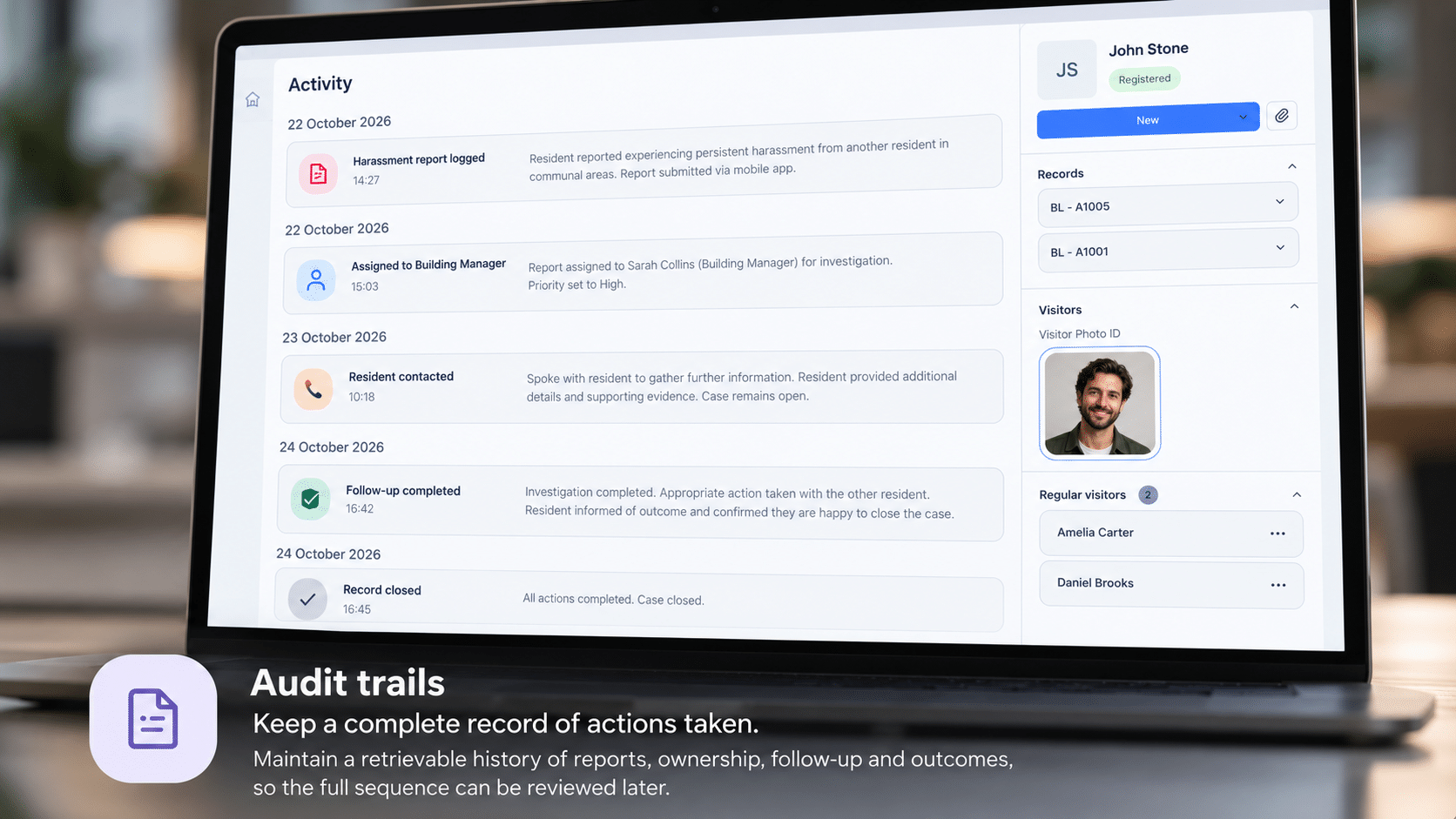
How Spike can Support Stronger Operational Readiness
At Spike, we believe digital building operations have an important role to play in supporting the processes around harassment prevention.
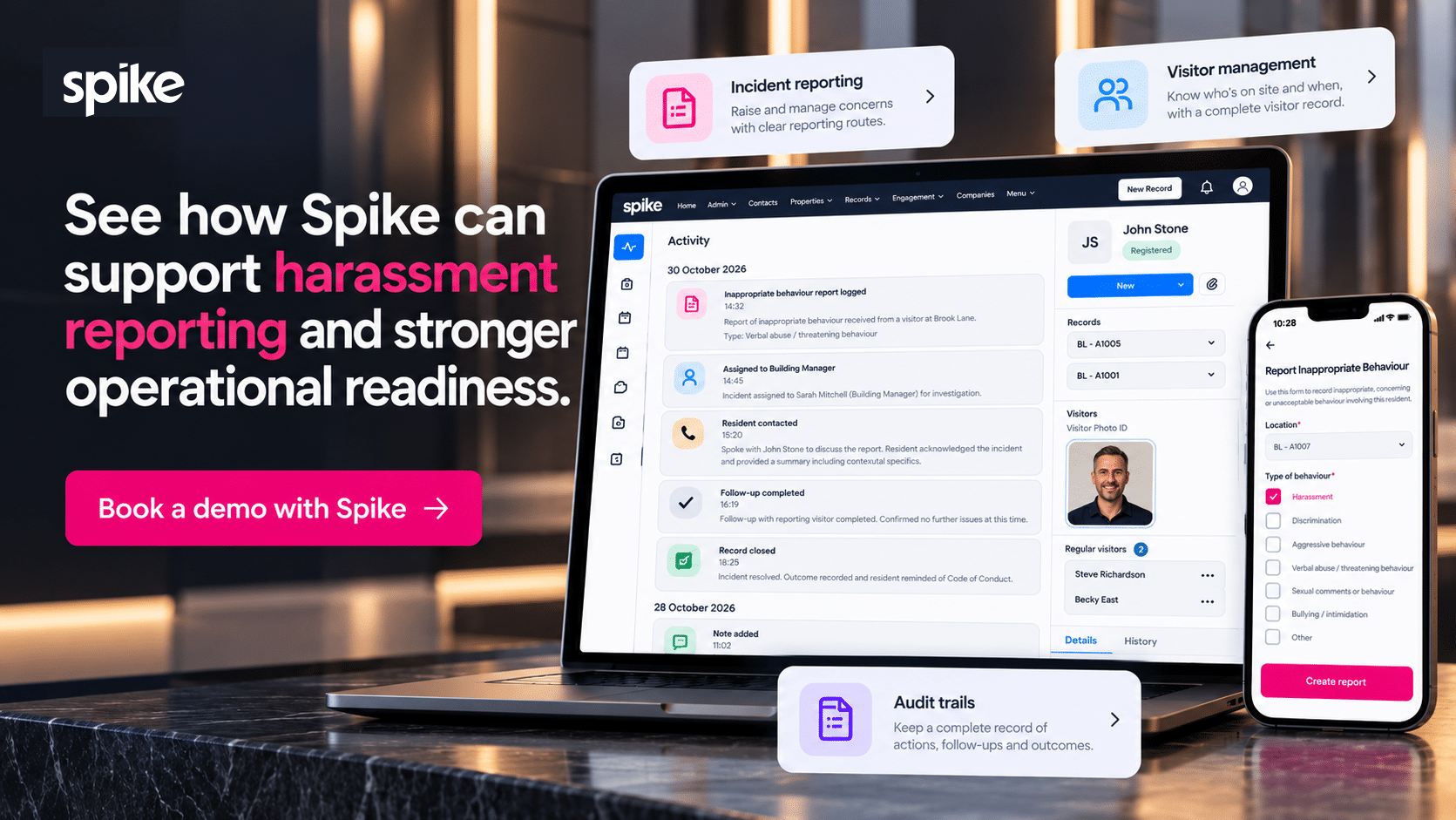
Through capabilities including visitor management, reporting and audit trails, Spike can help property teams maintain clearer records, improve visibility across teams and create a more consistent history of the actions taken when an issue is raised.
From identifying who was on site, to recording concerns, assigning ownership and tracking follow-up, Spike supports the operational processes that help teams respond more clearly and consistently.
Spike is not a substitute for an organisation’s legal obligations, HR policies, staff training or risk assessments. Instead, it provides part of the operational infrastructure that can support those measures.